
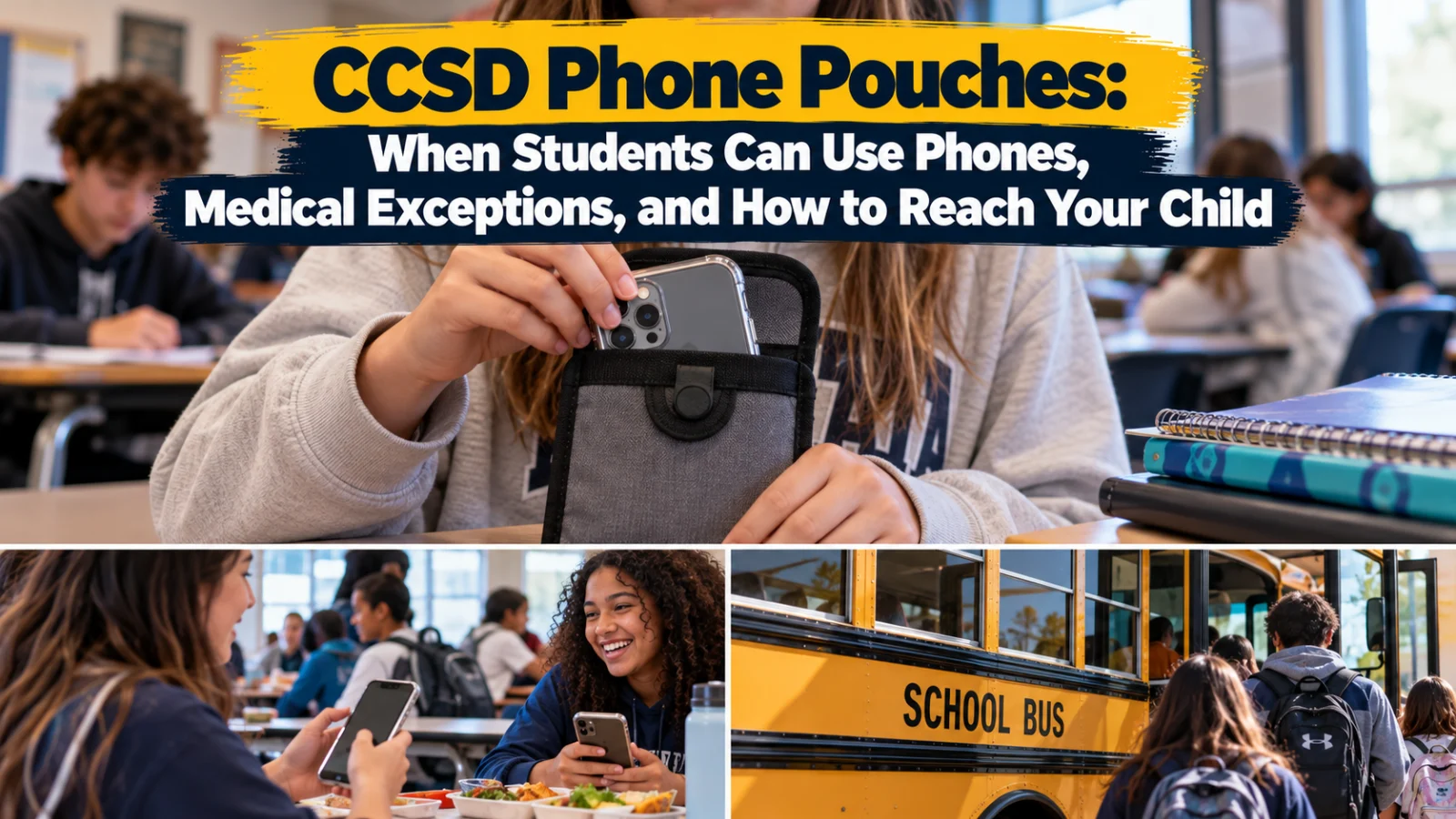
The pouch doesn't lock, and the phone stays in the classroom. CCSD's own FAQ answers the questions parents ask most: lunch, the bus, emergencies, glucose monitors, and a lost pouch.
Clark County School District requires students in grades 6 to 12 to keep personal cell phones in non locking, signal blocking pouches, and students can use their phones at lunch, during nutritional breaks, at district sponsored activities, and on the school bus. The pouch rule is in the Safeguarding Cellphones During Instruction section of Back to School, and the access times are in the Non Locking, Signal Blocking Pouch Frequently Asked Questions on the same page (checked Tuesday, October 13, 2026). Elementary schools can choose to require pouches for their campus.
A signal blocking pouch stops a phone from sending or receiving calls, texts, or data while it's inside.
Why does CCSD use pouches?
The Back to School FAQ answers that head on. Asked whether the pouches are a punishment, it says they are "not a punitive measure." It lists three goals: a classroom free from distractions caused by personal device use, fewer harms from misuse such as cyberbullying and exposure to harmful content, and more face to face connection between students.
Where is the phone during class?
In the pouch, in the classroom. Back to School says the phone is held "in a safe location near the student within the classroom" and is accessible in an emergency.
The page describes the rule two ways. Its opening says students put phones away "in the classroom." Its FAQ says personal devices in grades 6 to 12 will be kept in a non locking, signal blocking pouch "during the school day." The same FAQ then lists lunch, nutritional breaks, district sponsored activities, and the bus as times students have access.
How do I reach my child during the school day?
Call the school's main office. Back to School says parents may contact the main office to speak with their child when the need arises.
Texts and voicemails aren't lost. When a phone comes out of the pouch and regains service, it receives the missed texts, emails, voicemails, and notifications, the FAQ says. A message you send at 10:00 a.m. may not be seen until lunch.
Emergencies and lockdowns
The district's answer is the same for emergencies and lockdowns: the phone is in a pouch near the student in the classroom and is accessible in an emergency.
Nevada law now requires that kind of exception. NRS 392.4637, as amended by Senate Bill 444 and effective July 1, 2026 (this summary was checked against the enrolled bill text), requires every district's device policy to limit use during instruction, use progressive discipline, and include exceptions for an emergency or crisis, managing a student's health, teacher approved instructional use, and use written into an IEP or a Section 504 plan. The statute also says the policy must be printed in the rules of behavior the district gives students.
The law covers devices "while on the premises of a public school" and at school sponsored activities. Its definition of an electronic communication device leaves out any device the district or school issues to the student, so a school issued laptop is not part of the phone rule.
What happens if my child breaks the rule?
State law requires discipline on "a progressive scale based on the number and seriousness of the violations." The pouch FAQ itself doesn't list consequences. CCSD's older board Policy 5136, Personal Technology and Communication Devices (last revised in 2013), says students who violate it are disciplined under the district's Behavior Guidelines for Secondary Students. The policy's examples of improper use include disrupting instruction, academic dishonesty, cyberbullying or threatening others, sending offensive messages or images, and making private information public without consent.
The same 2013 policy allows devices at lunch, during nutrition breaks, at school sponsored activities, and on district buses. During the instructional day, it allows use only with the principal's approval. Ask your school which version of its rules of behavior it is using this year. The school office or this year's rules of behavior should show the progressive scale your campus applies. Policy 5136 is the last board policy on the topic, and state law requires the current rules to include progressive discipline.
Can my child keep a phone for a medical device?
Yes, case by case. Back to School says exceptions are addressed individually, considering the health and specific needs of a student with disabilities. Students whose phones run medical devices, such as diabetic pumps and continuous glucose monitors, may need the phone in a non blocking, Bluetooth enabling pouch near them. Students with medical exemptions should keep the phone on their person for an emergency or evacuation.
Start with the school's health office, which the page names as the contact. If your child has an IEP or a 504 plan and needs the phone for that plan, ask for it in the plan, since state law names both as required exceptions.
A lost or forgotten pouch
A student without a pouch may have to check the phone in with school administration, the FAQ says.
A lost or stolen pouch may cost the student the price of a replacement. School administration can waive that fee when it sees fit.
Pouches don't harm phones, according to the FAQ. Service is interrupted while the phone is inside and comes back when it's removed.
Questions about your child's school
Start with your school's main office for reaching your child, the health office for medical exceptions, and school administration for a lost pouch or a discipline question, as the Back to School FAQ directs. CCSD's switchboard is 702 799 CCSD (702 799 2273).